
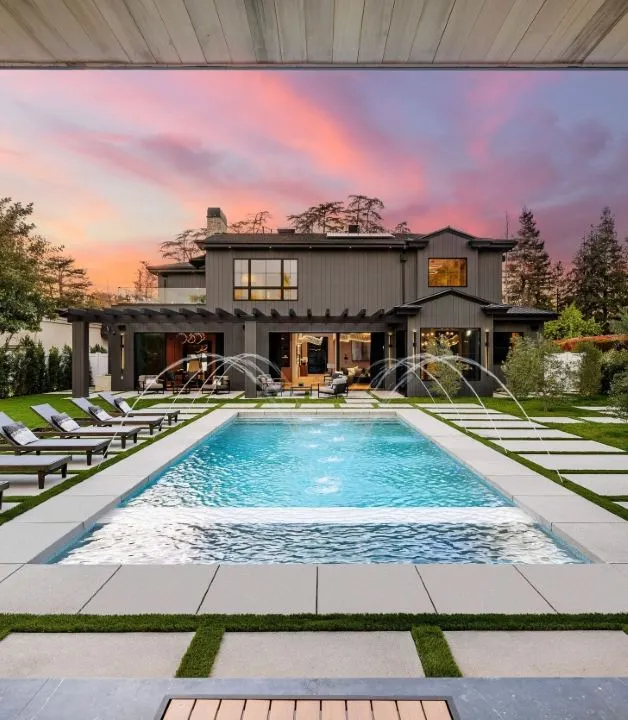
Why the shell matters on Florida's Gulf Coast
Your pool shell is the structure that keeps its shape for decades. In our area—high water tables, sandy soils, tropical downpours, and hurricane seasons—a steel-reinforced concrete shell delivers the rigidity, crack resistance, and watertightness a backyard pool needs to last. With proper design and materials, modern shotcrete/gunite shells routinely provide multi-decade service life when built to ACI shotcrete guidance and inspected correctly. (concrete.org, American Shotcrete Association)
What "steel-reinforced concrete shell" actually means
Concrete pools are typically built with shotcrete or gunite—both are concrete sprayed over a rebar framework to create a monolithic shell. The difference is when water is added: shotcrete is premixed wet concrete; gunite mixes water at the nozzle. Either method can produce a high-strength shell when properly executed. (concrete.org, River Pools and Spas)
Key benefits for Florida homes
- Custom shapes & benches without weak cold joints when shot properly. (Drakeley Industries)
- High strength and low permeability for a watertight shell. (Concrete Decor)
Florida code & inspections you should expect (and why they protect you)
1) Steel & bonding inspection happens before concrete.
Florida’s training documents for residential pools specify the first inspection after excavation and placement of reinforcing steel, bonding, and main drain—and before concrete is applied. This proves the rebar cage, equipotential bonding, and drains are right before the shell is shot. (Florida Building)
2) Electrical bonding around the pool.
NEC 680.26 requires an equipotential bonding grid connected to the shell reinforcing steel and the deck/perimeter surfaces to reduce voltage gradients—critical for safety. (Florida Building)
3) Pressure testing of pool piping.
Florida training materials call for pressure testing pool piping to ≥35 PSI for 15 minutes (authority may require proof) before backfill/cover. (Florida Building)
4) Final inspection + safety barrier.
Pools must pass a final inspection with code-compliant barriers (fence/screen/alarms/cover) before completion. (Florida Building, Miami-Dade County, Palm Beach County, OCFL)
Hydrostatic pressure & why a relief valve often isn't optional here
Large rain events and high water tables (common in Sarasota, Tampa Bay, and Lee County) can push groundwater upward. Florida’s Residential Code requires an approved hydrostatic relief device in areas of anticipated water table (exception: plastic liner pools). That’s your safety valve against shell “float” or uplift when the pool is empty or partially drained. (Florida Building, Miami Beach Novus Agenda)
Engineering details that make a stronger shell
- Rebar size, spacing, laps, and cover must follow the engineer’s sealed plan and applicable ACI/ASTM references; steel must be tied in place to avoid movement during shooting. (Pool Engineering)
- Bond the shell steel and all metallic parts; typical connections use #8 AWG copper (or equivalent methods) per NEC 680.26 and local interpretation. (Florida Building, electricallicenserenewal.com)
- Water velocity, valves, and access pits (for any valves under slabs) must follow Florida code to support circulation and service. (Florida Building)
Local permitting at a glance
Tampa / Hillsborough County
- Submit a digitally sealed plan set to current FBC; include site-specific pool layout, setbacks, and flood-hazard design (ASCE 24 statement) if applicable. (hcfl.gov)
Fort Myers / Lee County
- Apply via eConnect; plan package must include code compliance statements, safety barrier details, and HOA authorization if required. Inspections typically include Pool Steel & Bonding, Deck & Bonding, Electrical Final, and Pool Final. (Lee County Government)
Sarasota (County & City)
- Permit is required prior to any pool work; the City portal shows typical “Pool Shell Bonding” inspections during construction. (sarasotacounty.elaws.us) (ftgportal.sarasotafl.gov)
Tip: Beyond county permits, always check HOA rules for setbacks and enclosures to avoid disputes after county approval. (Local headlines show this can be costly.) (The Sun)
How our shells are built (what we do differently)
- Site-specific engineering for soil conditions, surcharge loads, and flood zones (when applicable). (hcfl.gov)
- Rebar cage built to plan (laps, chairs/spacers for cover, tied to stay in place). (Pool Engineering)
- Equipotential bonding integrated with the steel and deck perimeter. (Florida Building)
- Shotcrete/gunite application for a monolithic shell; no cold-joint shortcuts. (Drakeley Industries)
- Hydrostatic relief strategy (valve and/or uplift design) for high-water-table areas. (Florida Building)
- Mandatory inspections before concrete and at final, plus 35-PSI pipe test. (Florida Building)
FAQs (add this as FAQ schema)
How long does a shotcrete/gunite shell last?
With proper design and execution, authoritative ACI guidance indicates 50–100 years+ of service life is realistic. (concrete.org)
Is a hydrostatic relief valve required for my pool?
If your property has an anticipated water table, Florida code requires an approved device (liner pools are exempt). Your engineer or contractor should confirm this at design. (Florida Building)
What inspections should I see on my permit?
Expect inspections for steel/bonding before concrete, plus final with barrier; counties may list additional electrical and deck/bonding checks. (Florida Building, Lee County Government)
Publish-ready extras
Internal links to add:
Custom Pool Construction · Pool Resurfacing · Pavers & Decking · Screen/Aluminum Enclosures · Contact/Free Quote
Local SEO signals:
- Add city blocks: “Serving Sarasota, Siesta Key, Lakewood Ranch · Tampa, Westchase, Carrollwood · Fort Myers, Cape Coral, Estero.”
- Embed a Google Map on your Contact page and reference NAP consistently.
CTA (top & bottom):
Build a Steel-Reinforced Pool That Lasts
Get a clear, code-compliant plan for Sarasota, Tampa, or Fort Myers—on time & on budget.
Why this article can outperform local pages
Most local pages mention “gunite strength” but omit code-specific checkpoints that homeowners actually search for (e.g., steel/bonding inspection timing, 35-PSI pipe test, equipotential bonding, hydrostatic relief). We’ve included those with citations from Florida’s own training materials and county checklists so the content demonstrates E-E-A-T and answers pre-permit questions your prospects have.
Citations
- Florida Building Commission training deck—inspection timing, bonding references, pipe testing, and wastewater details. (Florida Building)
- ACI/ASA shotcrete guidance—durability & process. (concrete.org, American Shotcrete Association)
- Shotcrete/gunite definitions—wet vs. dry mix. (River Pools and Spas)
- Hydrostatic relief requirement—Florida Residential Code references and municipal plan notes. (Florida Building, Miami Beach Novus Agenda)
- Hillsborough County (Tampa) pool submittal/flood design checklist. (hcfl.gov)
- Lee County (Fort Myers) pool guide & inspections. (Lee County Government)
- City/County Sarasota—permit required & pool shell bonding inspection examples. (sarasotacounty.elaws.us, ftgportal.sarasotafl.gov)
- Barrier compliance—FBC Residential guidance used by counties. (Miami-Dade County, Palm Beach County)
- HOA cautionary example (setbacks). (The Sun)