Pool Screen Repair Cost in North Port, FL: 2026 Price Guide
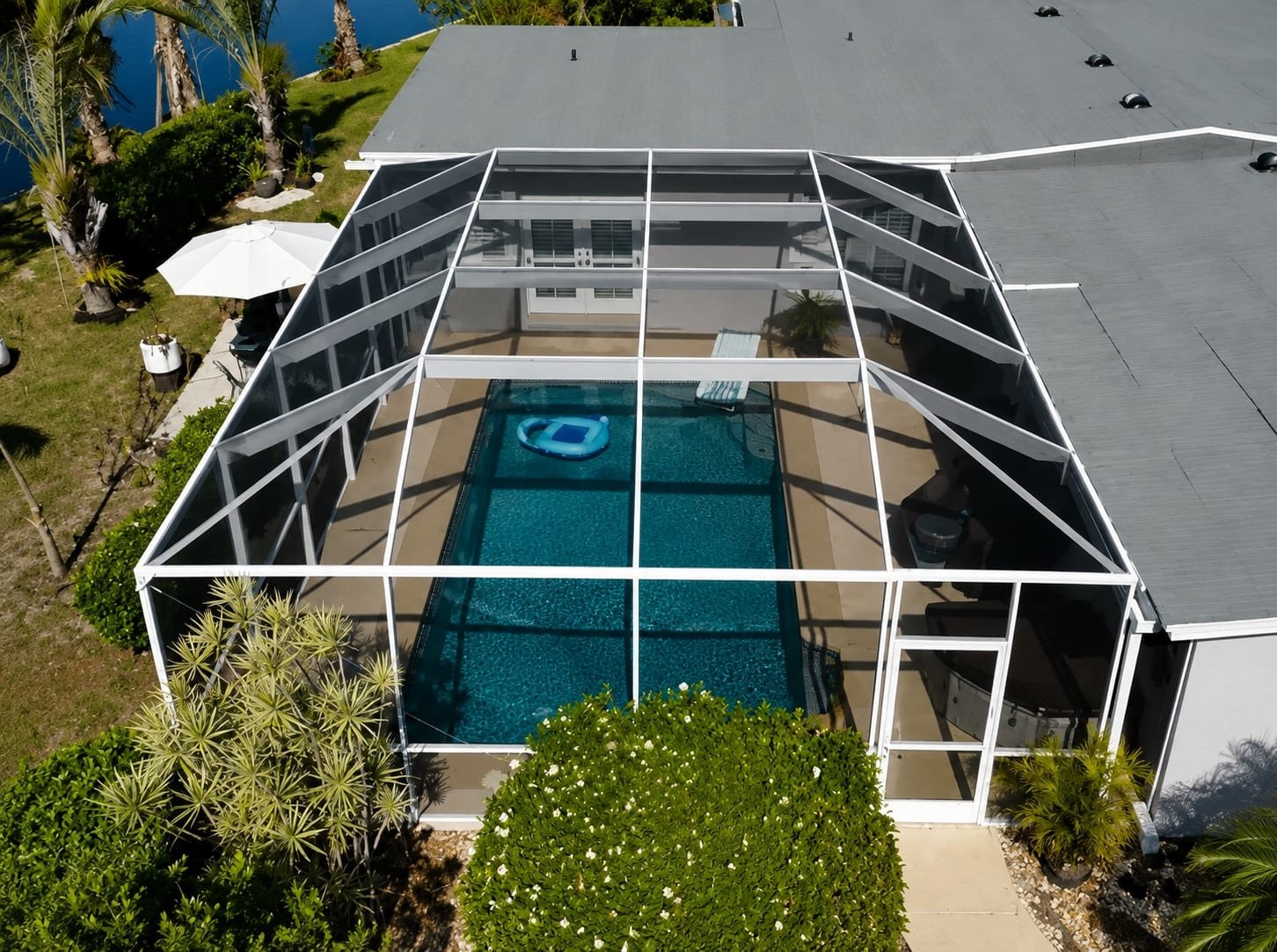
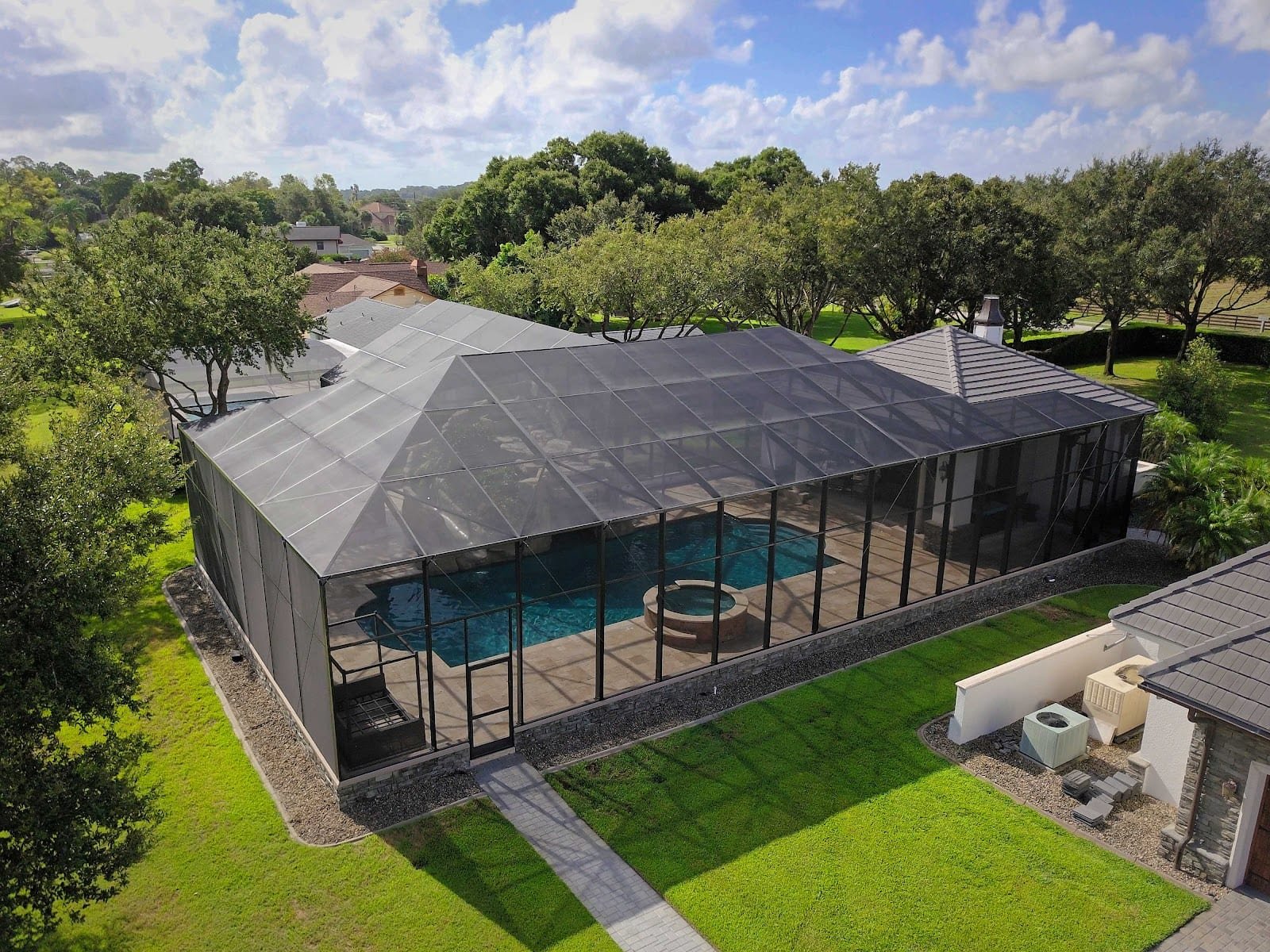
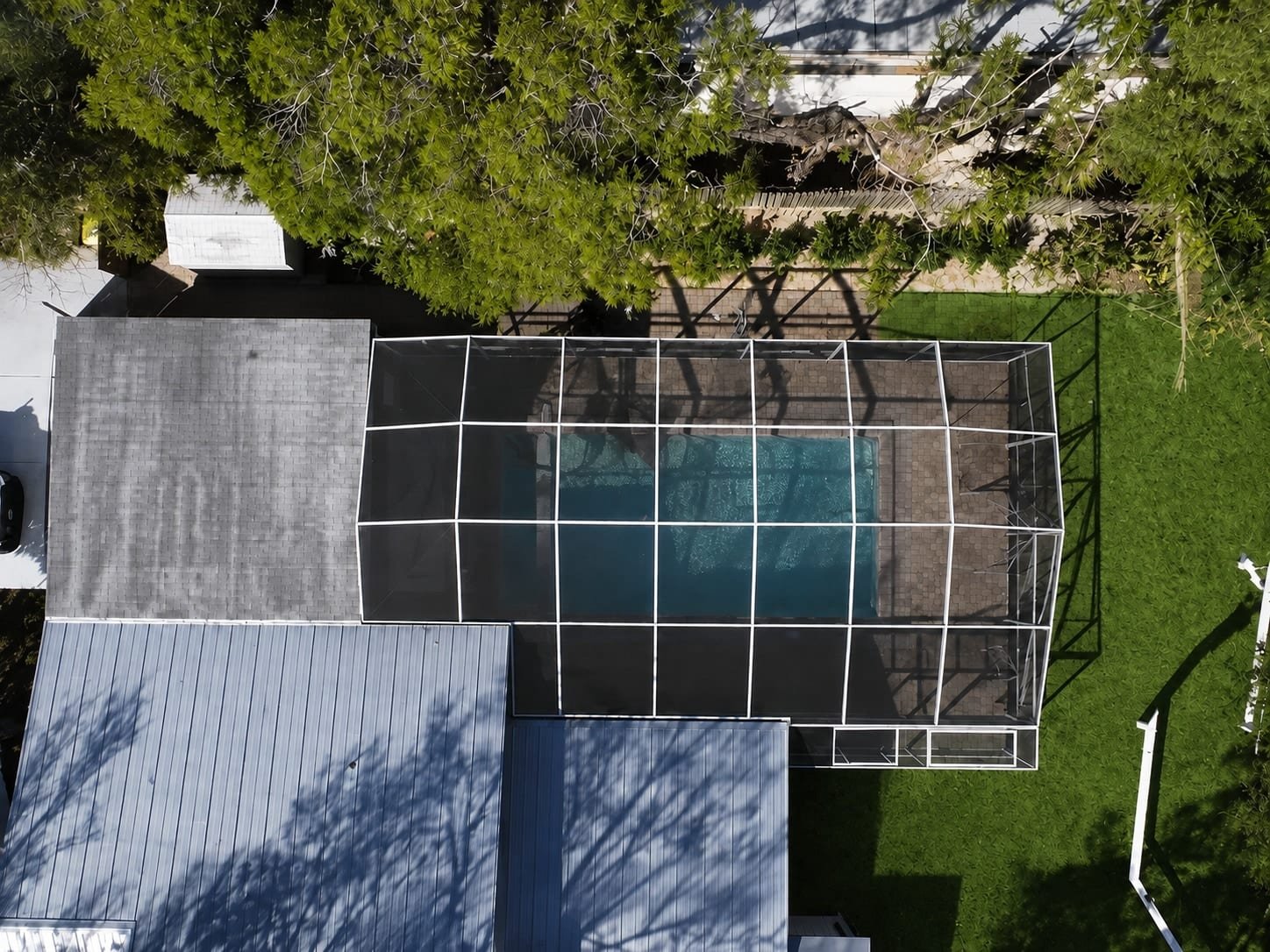
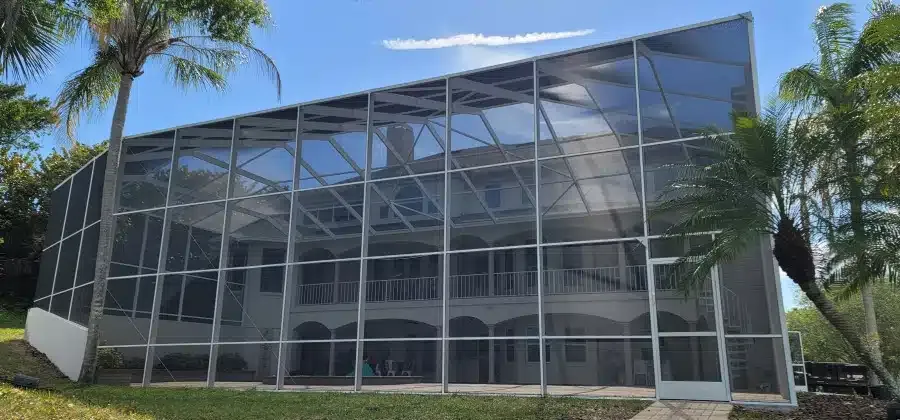
If you own a pool screen enclosure in North Port or the surrounding Sarasota-Bradenton area, you've probably noticed that Florida's sun, salt air, and summer storms are relentless on screens. Pool screen repair costs in North Port vary wildly depending on whether you're fixing one panel or replacing the entire cage, but most homeowners don't realize that the decision between a patch job and a full rescreen often comes down to one critical threshold: if more than 20–30% of your panels are damaged, a complete rescreening becomes the smarter investment. This guide breaks down real pricing for North Port and nearby areas, explains what drives costs up or down, and helps you make the right call before calling a contractor.
The Questions Every North Port Homeowner Asks
- How much does it really cost to repair or replace a pool screen enclosure in North Port?
- When does a simple panel repair make sense versus investing in a full rescreen?
- What Florida-specific factors—UV, salt, hurricanes—are eating away at my screen's lifespan and budget?
Key Findings
- Single ground-level panel repairs cost $35–$75 and take 1–2 hours; full pool cage rescreening runs $1,200–$4,500 depending on enclosure size and screen material.
- Standard fiberglass mesh, the most common choice, lasts only 5–7 years under Florida's intense UV radiation—significantly shorter than the national average.
- Once 20–30% or more of your panels are damaged, a complete rescreen becomes more cost-effective than patching individual panels.
- North Port and Sarasota County generally don't require a permit for rescreening (mesh replacement alone), but structural work like frame replacement or new enclosure builds does.
- Material choice and environmental exposure create a 50–100% price variance: coastal properties and hurricane-prone lots pay a premium for durable, salt-resistant options.
This guide synthesizes current pricing from local North Port and Sarasota County contractors, Florida building code requirements, and environmental data on UV exposure and salt air corrosion specific to the region. Cost ranges reflect 2026 market rates for residential pool enclosures between 200–500 square feet (the typical size in the area) and include labor, materials, and standard site cleanup. Permitting guidance is based on Sarasota County building department standards and North Port municipal code. Screen lifespan data derives from manufacturer specifications and field observations across Florida's climate zones. All figures are presented as ranges to account for regional variation and individual project complexity.
1. Pool Screen Repair Cost in North Port: Single Panel vs. Full Rescreen Breakdown
The math on pool screen repair North Port homeowners face isn't complicated once you see it laid out, but most people never do the comparison until they've already sunk money into a series of small fixes. A single ground-level panel with an isolated tear runs $35–$75 and takes an hour or two—cheap, fast, and usually worth doing if that's genuinely all that's wrong. Elevated panels, roof sections, or corners tucked behind landscaping push that number to $75–$150 because a technician needs a ladder or lift and more careful handling to avoid damaging adjacent screens.
Full rescreening is a different animal entirely, both in scope and in the economics behind it. A typical 300–400 square foot enclosure—the standard size for North Port homes—runs $1,200–$4,500 depending on material and complexity, and the job takes 2–5 days rather than an afternoon. The reason a full rescreen doesn't scale up in cost the same way repeated single-panel repairs would—even though it covers many more panels—is that setup, staging, and mobilization costs get spread across the entire job instead of being paid over and over for each visit.
That's exactly why the 20–30% damage threshold matters so much. Below that line, you're paying for isolated fixes on a screen that's otherwise sound. Above it, you're essentially paying setup costs repeatedly while the rest of the enclosure keeps deteriorating anyway. Structural damage—corroded frame members, failed fasteners, or storm-twisted aluminum—is its own separate cost category, running $4,500–$8,000+ because it requires rebuilding the skeleton the screen attaches to, not just the mesh itself.
| Tipo de Reparación | Costo Mínimo | Costo Máximo | Tiempo Promedio |
|---|---|---|---|
| Reparación de panel individual (nivel de suelo) | $35 | $75 | 1-2 horas |
| Rescreen completo de enclosure promedio | $1,200 | $4,500 | 2-5 días |
- A typical 300–400 square foot pool cage is the standard size in North Port; larger or irregular shapes push costs toward the high end.
- Labor is 60–70% of total rescreen cost; material (mesh, fasteners, sealant) is 30–40%.
- Weekday service is often cheaper than weekend emergency repairs; plan ahead if your damage isn't catastrophic.
2. Why Florida's Climate Accelerates Pool Screen Damage: UV, Salt Air, and Hurricane Impact
Standard fiberglass mesh lasts 10–12 years in a temperate northern climate. In North Port, that same material typically fails within 5–7 years, and the reason comes down to latitude and sun exposure. Sitting at roughly 27°N with more than 250 sunny days a year, this stretch of the Gulf Coast subjects polymer resin in mesh screens to a level of UV bombardment that simply doesn't exist in most of the country. The resin doesn't rip apart overnight—it embrittles gradually, and by year four or five, mesh that once flexed under a light breeze snaps like a dry twig under the same pressure.
Salt air compounds the problem for anyone closer to the coast. Properties in Venice, Lakewood Ranch, or anywhere within a few miles of the Gulf see accelerated oxidation on aluminum frames and rust creeping into fastener heads long before inland homes show similar wear. That corrosion isn't just cosmetic—it weakens the connection points holding screen panels to the frame, which is exactly where storm damage tends to start.
Hurricane season, running June through November, is the wildcard that turns gradual UV wear into sudden catastrophic loss. A single storm can blow out panels that were already brittle from sun exposure, and it's common for a category 1 wind event to damage 30–60% of an enclosure's panels in one afternoon. Add in Florida's humidity, which breeds algae growth on screen surfaces and speeds up fastener decay in ways drier climates never experience, and you start to understand why pool cage rescreening cost Florida homeowners budget for tends to run on a much shorter cycle than screen manufacturers' national warranty language would suggest.
- Check your screen annually after June; UV-embrittled mesh tears easily under wind or pressure.
- Coastal homeowners should expect 3–5 year screen life and budget for more frequent rescreening.
- A hurricane impact or category 1 wind event commonly damages 30–60% of panels, instantly triggering a full rescreen recommendation.
Think of it like financing a car on a 5–7 year loan instead of a 15-year mortgage. Florida's climate compresses the payoff cycle on your screen, so if you're mentally budgeting as though it'll last a decade the way it might up north, you're setting yourself up to overpay in emergency repairs. A single hail-sized tear is like a fender bender—fix it quickly and move on. Ignoring 30%+ damage across the enclosure is more like driving on bald tires and hoping the next pothole doesn't finish the job.
3. Cost Comparison: Fiberglass vs. Polyester vs. Pet-Resistant Screen Materials for Florida
About 80% of residential rescreens in North Port still use standard fiberglass mesh, and it's easy to see why—at $1.50–$2.50 per square foot installed, it's the cheapest option on the table. The tradeoff is that it's also the option most vulnerable to Florida's UV exposure, typically topping out at 5–7 years before it needs replacing again.
Polyester or high-grade mesh costs 30–40% more upfront, running $2.50–$3.50 per square foot, but stretches service life to 8–10 years. For anyone planning to stay in their North Port home for a decade or more, that math tends to favor the upgrade—you're paying more once instead of paying twice for two separate fiberglass rescreens over the same period. Coastal properties in particular benefit from the added durability against salt exposure.
Pet-resistant, reinforced mesh runs $3.00–$4.50 per square foot and holds up against claws that shred standard fiberglass in a single scratching session. It doesn't eliminate damage risk entirely—it just reduces how often you're calling a contractor for puncture repairs. Solar or reflective screens, at $3.50–$5.00 per square foot, cut pool-area glare and can lower the immediate outdoor temperature by several degrees, though they're visibly different from outside the enclosure and haven't caught on widely in North Port for aesthetic reasons.
| Screen Material | Cost per Sq Ft (Installed) | Lifespan in Florida | Best For | Maintenance Burden |
|---|---|---|---|---|
| Standard Fiberglass (most common) | $1.50–$2.50 | 5–7 years | Budget-conscious homeowners; inland properties | Minimal; inspect annually |
| Polyester/High-Grade Mesh | $2.50–$3.50 | 8–10 years | Coastal homes; hurricane-prone areas | Moderate; clean after storms |
| Pet-Resistant/Reinforced | $3.00–$4.50 | 6–9 years | Homes with pets or high-traffic families | Higher; resists claws but needs gentle pressure washing |
| Solar/Reflective Screen | $3.50–$5.00 | 7–9 years | Hot climates; energy-conscious buyers | Moderate; reduces pool sun glare and cooling load |
| Recommendation | — | — | Start with polyester for coastal North Port; standard fiberglass if inland and budget-limited | Any choice requires post-storm inspection every hurricane season |
- If you live within 5 miles of Gulf coast (Venice, Englewood), polyester is the smarter choice despite higher upfront cost.
- Pet-resistant screens don't eliminate damage risk—they just reduce frequency. Prevention (pet barriers during high wind) still matters.
- Solar screens may lower pool area temperature by 5–8°F but won't noticeably reduce home AC bills.
4. How to Estimate Your Pool Cage Rescreening Cost: Size, Material, and Square Footage
Estimating your own project budget starts with a tape measure. Multiply the length and width of your cage in feet to get total square footage—most North Port enclosures land between 200 and 500 square feet. Rectangular cages are the cheapest to rescreen; irregular shapes with multiple angles, roof transitions, or wraparound sections add 10–20% to labor because each seam and corner requires custom cutting rather than repeating the same panel size across the job.
Accessibility matters just as much as shape. Panels 12 feet or higher, roof sections, or corners crowded by trees add $150–$300 per section because they require additional equipment and more careful, slower work. Once you know your base square footage, apply the material multiplier: standard fiberglass is your baseline, polyester adds 30–50% to material cost, and premium pet-resistant mesh adds 50–100%.
Here's how that plays out on a real 300 square foot job. In standard fiberglass, that's 300 × $2.00 = $600 in materials, plus $600–$900 in labor, landing the total around $1,200–$1,500. The same enclosure in polyester runs 300 × $3.00 = $900 in materials plus $600–$900 labor, totaling roughly $1,500–$1,800. That few-hundred-dollar gap is the price of buying several extra years of service life.
- A 300 sq ft standard fiberglass rescreen: 300 × $2.00 = $600 (materials only); add $600–$900 labor = ~$1,200–$1,500 total.
- Same 300 sq ft in polyester: 300 × $3.00 = $900 materials + $600–$900 labor = ~$1,500–$1,800 total.
- Get 2–3 local quotes and ask contractors to itemize mesh, frame work, fasteners, and labor separately—you'll spot price outliers.
5. Do You Need a Permit for Pool Screen Repair or Rescreening in North Port, FL?
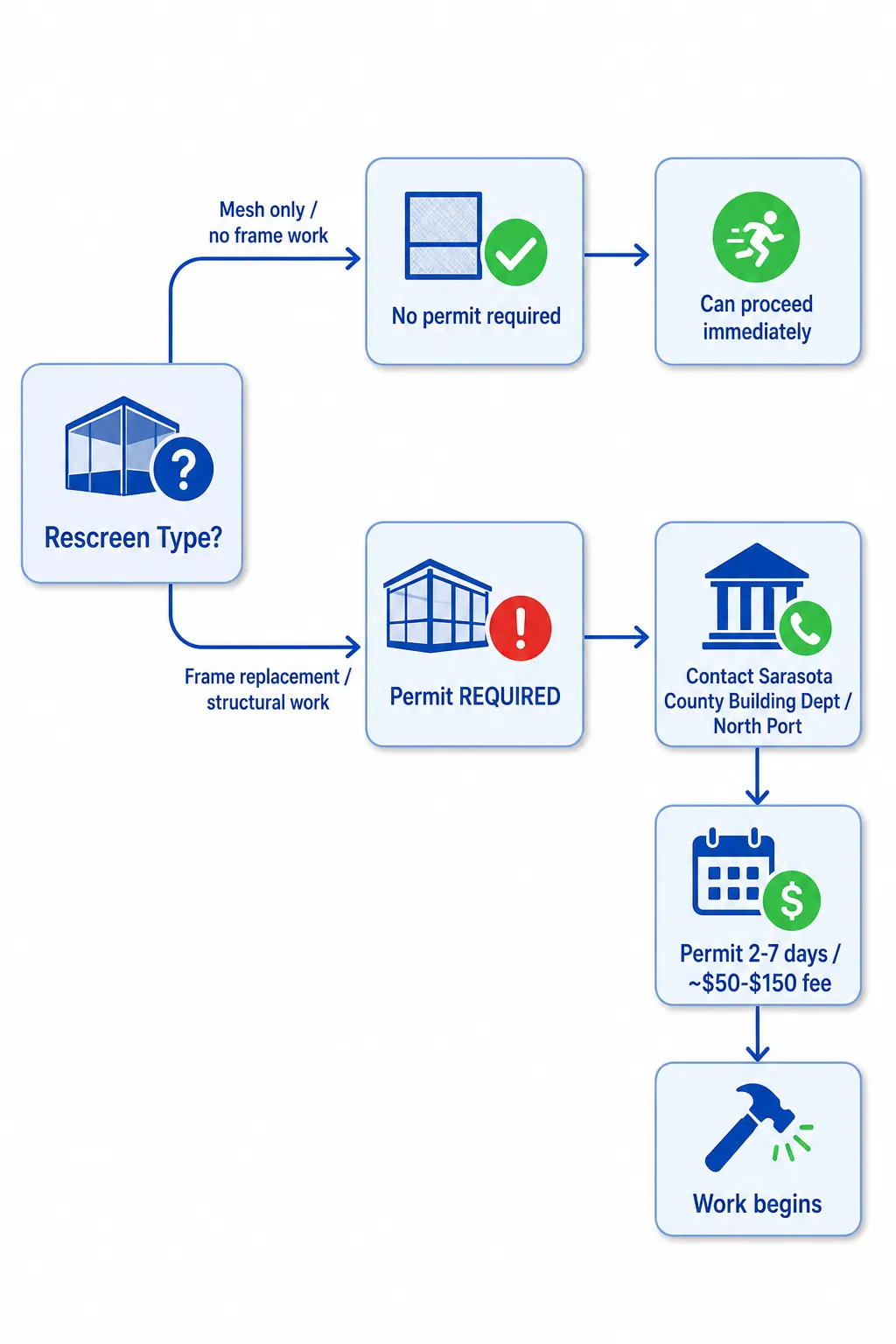
Good news for most homeowners searching for pool enclosure rescreening near me: straightforward mesh replacement on an existing, sound frame is treated as routine maintenance in North Port and doesn't trigger a permit requirement. If your contractor is simply swapping torn screen for new panels on the frame you already have, you can typically schedule and complete the work without paperwork.
That exemption ends the moment the job crosses into structural territory. Replacing frame members, posts, fasteners, or roof attachment points is considered structural work under Sarasota County and North Port code, and it requires a permit before work begins. This distinction trips up plenty of homeowners who assume "rescreening" always means the same low-friction process, only to find out their storm-damaged frame needs actual permitted repair.
When a permit is required, expect a fee in the $50–$150 range and an approval timeline of roughly 2–7 days. Some homeowners pull their own permit for mesh-only work just to be safe, though many contractors fold permitting into their quote for anything involving frame repair. Either way, don't skip this step—a code violation discovered later, especially during a home sale inspection, costs far more time and money than a five-minute phone call up front.
- When in doubt, call North Port Building & Zoning (239-993-5000) or Sarasota County Building Services—5-minute conversation beats a code violation later.
- HOA approval may be required separately from municipal permits; check your CCRs before scheduling work.
- Hurricane-damaged enclosures sometimes trigger mandatory structural inspection; inspectors may flag fastener corrosion or frame rot requiring repair.
6. When to Repair vs. Replace: The 20–30% Damage Threshold and Total Cost of Ownership
The most expensive mistake in pool screen maintenance isn't a single bad decision—it's a slow accumulation of reasonable-seeming small ones. Homeowners patch one panel, then another six months later, then two more the following spring, rationalizing each $35–$150 repair as cheaper than a full rescreen. By year four or five, 40% or more of the enclosure is compromised, and they've spent nearly as much on piecemeal fixes as a full rescreen would have cost from the start.
Here's where the crossover point becomes obvious in hindsight: once scattered repairs add up to $500–$800, a full rescreen is often only $400–$1,000 further away. At that point, continuing to patch is throwing good money after bad—you're paying labor and mobilization fees repeatedly instead of once, and the underlying screen keeps degrading around whatever you just fixed.
Storms accelerate this calculation dramatically. A single hurricane or severe wind event commonly damages 30–60% of panels in one pass, instantly pushing an enclosure past the threshold where patching still makes financial sense. A full rescreen after that kind of event doesn't just fix the immediate damage—it resets the clock, giving you another 5–7 years of trouble-free use before the next cycle.
The Martinez family in Lakewood Ranch offers a clear real-world example. They own a 350 square foot pool cage with standard fiberglass mesh installed four years earlier. After a late-June storm, they found tears in 8 of the 12 ground-level panels—about 65% damage. Their contractor quoted $125 per panel repair, or $1,000 total, against $2,100 for a full polyester rescreen. They chose the rescreen, locked in an 8–10 year lifespan, and gained peace of mind through the next two to three hurricane seasons—saving an estimated $800–$1,200 over eight years compared to the repeat-repair path.
- Document repair costs over time; if you hit $500+ in repairs within 2 years, a rescreen ROI is likely within 12–24 months.
- If you're selling within 3 years, a full rescreen adds curb appeal and attracts pool-conscious buyers; cheap patches signal neglect.
- Budget for rescreening every 5–7 years in your annual homeowner reserve—North Port's climate doesn't allow longer intervals.
What This Means for You
- Homeowners should budget $1,200–$4,500 for rescreening every 5–7 years as a fixed maintenance cost of pool ownership in North Port, not an emergency surprise.
- HOA managers and property managers overseeing multiple units should standardize on polyester mesh for common-area pools to minimize emergency repair calls during hurricane season.
- Real estate agents and sellers should view a full rescreen as a $1,500–$3,000 buyer-appeal investment that recoups 60–80% of cost at closing in a pool-centric market like North Port.
- Contractors bidding on North Port rescreens should clearly itemize labor, mesh, fasteners, and frame inspection costs separately so homeowners understand where money goes and feel confident comparing quotes.
Frequently Asked Questions
How much does pool screen repair cost in North Port for just one or two panels?
Ground-level panel repairs typically run $35–$75 each and take 1–2 hours. Elevated or hard-to-access panels cost more, usually $75–$150, because they require a ladder or lift and extra care to avoid damaging neighboring screens.
What's the average pool cage rescreening cost in Florida for a typical North Port home?
Most North Port enclosures fall between 200–500 square feet, and a full rescreen in that range runs $1,200–$4,500 depending on material choice and enclosure complexity. Standard fiberglass sits at the lower end; polyester or pet-resistant upgrades push costs higher but extend service life.
Do I need a permit to rescreen my pool enclosure in North Port?
No—if you're only replacing mesh on an existing, structurally sound frame, that's considered maintenance and doesn't require a permit. However, if the job involves replacing frame members, fasteners, or roof attachment points, you'll need a permit from Sarasota County or North Port, typically costing $50–$150 with 2–7 day approval.
How do I know if I need a full rescreen instead of individual repairs?
Once 20–30% or more of your panels show damage, a full rescreen typically becomes more cost-effective than continuing to patch individual sections. This is because setup and labor costs get spread across the whole job rather than repeated for each small repair visit.
Why does my screen wear out faster than screens in other states?
Florida's intense UV exposure, high humidity, salt air near the coast, and hurricane season combine to degrade standard fiberglass mesh in just 5–7 years, compared to 10–12 years in more temperate climates. Coastal North Port properties often see even shorter lifespans due to added salt corrosion on frames and fasteners.