Concrete Pool Construction Near Me: Complete Sarasota-Bradenton Guide
You've decided to move forward with concrete pool construction near me in your Sarasota or Bradenton backyard. Now comes the hard part: figuring out exactly what happens from permit application to the day you actually get to dive in. Unlike a generic pool guide, this walkthrough accounts for Sarasota County and Manatee County's specific requirements, Florida's sandy soil challenges, and the mandatory inspections that protect your investment. We'll break down the real timeline, the actual costs, and what to expect at every phase.
What You'll Learn About Concrete Pool Construction Near Me
- How long does concrete pool construction near me actually take once I get a permit?
- What are the specific county inspections and engineering requirements I need to satisfy?
- How much will a custom gunite pool realistically cost in the Sarasota-Bradenton market?
- What soil-related challenges will my builder face, and how do they affect the structural integrity?
- Am I protected if a hurricane hits during or after construction?
Key Findings
- Concrete pool construction near you takes 8–14 weeks after permit approval; permitting itself adds 2–8 weeks depending on plan complexity and county review speed.
- Sarasota County alone issued 230 new pool permits in 2026, valued at $19.7 million, reflecting surging demand in Southwest Florida.
- Custom gunite pools in Sarasota-Bradenton range from $78,000–$100,000 (standard) to $150,000+ (high-end), with soil engineering and local code compliance driving costs.
- Florida's sandy and clay soils require specialized engineering and steel reinforcement to prevent hydrostatic uplift and lateral earth pressure failures.
- Gunite curing requires 7–28 days of controlled moisture conditions to achieve required compressive strength; rushing this phase compromises structural integrity.
- Multiple county inspections at rebar, plumbing, electrical bonding, and final safety stages are non-negotiable before filling.
How We Researched This Guide
This guide synthesizes local Sarasota County and Manatee County building code requirements, developer interviews, and 2026 market data to deliver a practical, timeline-focused roadmap for concrete pool construction in the region. We've cross-referenced Florida Building Code specifications, hurricane wind-load engineering standards, and actual permit processing times to ensure every claim reflects real-world conditions in the Sarasota-Bradenton market. Where we cite costs or timelines, these are 2026 market averages for custom gunite pools; vinyl and fiberglass alternatives are outside this guide's scope.
1. Concrete Pool Construction Near Me: The Full Timeline From Permit to First Swim
The single biggest misconception homeowners have about concrete pool construction near me is that it moves at the pace of the actual build. It doesn't. The permitting phase — typically 2 to 8 weeks depending on how complex your plans are and how backed up the county review queue happens to be — is often the longest single stretch of the whole project. Detailed engineering plans, site surveys, and multiple review cycles all happen before a shovel ever touches the ground.
Once your permit clears, pre-construction work kicks off: site mobilization, soil testing, utility locates, and final grading. These steps usually run about a week, assuming there are no surprises underground. Active construction — excavation through the gunite spray — moves relatively fast, roughly 4 to 5 weeks when everything goes smoothly.
Then comes the part nobody wants to hear about but everybody needs to respect: the curing window. Gunite needs 7 to 28 days of moisture-controlled curing before mechanical systems, tile work, or heavy equipment go anywhere near the shell. Finishing touches — tile, decking, equipment startup, and the final inspection pass — typically add another 2 weeks on top of that.
Why does the timeline vary so much from one Sarasota-Bradenton project to the next? Soil conditions, permit backlog, Florida's summer weather, and plan revision cycles are the usual culprits. A lot beneath older tree canopy or near a canal, for instance, may reveal soil conditions during excavation that weren't fully apparent in the initial geotechnical survey.
- Permitting is the longest and least predictable phase; always add 2–4 weeks as a buffer.
- Poor soil conditions or unforeseen site challenges can delay excavation by 1–3 weeks.
- Florida's summer rainy season can extend the curing phase if moisture control is compromised.
- Final inspections are quick (1–2 days) once all systems pass, but scheduling them depends on county workload.
2. Sarasota County Permitting and Inspection Requirements for Gunite Pool Construction
Gunite pool construction Sarasota homeowners go through isn't a one-inspection-and-done process. Before you ever submit an application, expect a week or two of prep work — engineering drawings and site surveys need to be locked in first. Sarasota's plan review cycle typically runs 2 to 6 weeks; Manatee County can stretch to 3 to 8 weeks, especially if your design includes a spa, sun shelf, or non-standard shape that requires additional structural sign-off.
Once the permit is issued, the inspection sequence begins in earnest. The pre-pour inspection checks rebar placement, reinforcement spacing, soil compaction, and plumbing rough-in before anyone sprays gunite. After the shell goes up, a post-spray inspection verifies gunite thickness, plumbing stub-outs, and overall shell integrity. Then comes the electrical bonding inspection — a step many first-time pool owners underestimate — which ensures every metal component meets National Electrical Code standards for lightning protection. Florida's frequent summer storms make this inspection especially important, not just a bureaucratic box to check.
The final walk-through covers tile, coping, decking, equipment, water quality systems, and general safety compliance. Only after every one of these inspections passes does the county issue a Certificate of Compliance, which is required before you're legally allowed to fill the pool.
- Inspection backlogs can delay scheduling by 1–2 weeks; request dates as soon as the prior phase is complete.
- Bring permit documents and contractor's license to every inspection; county inspectors verify credentials on-site.
- If an inspection fails, corrections must be made and re-inspected; budget 1–2 weeks for this cycle.
- Manatee County can be more stringent on hurricane wind-load engineering; budget extra time for structural reviews.
3. Engineering Gunite Pools in Florida's Sandy Soil: Why It Matters for Your Pool's Longevity
Sarasota-Bradenton sits on ancient sandy marine deposits laced with clay lenses, and the water table fluctuates with the seasons as a matter of course, not an exception. That matters more than most homeowners realize. Water pressing up from beneath an empty or partially filled shell exerts hydrostatic uplift equivalent to 62.4 pounds per cubic foot — enough force to crack or "pop" a poorly engineered pool floor if the site isn't properly drained.
Engineers respond to this with oversized reinforcement, deeper pilings in high water table zones, and permanent drainage systems that relieve pressure before it becomes a problem. On top of that, the Florida Building Code mandates steel reinforcement patterns and concrete thickness specifically designed to resist lateral forces from hurricane-force winds — this isn't an upgrade, it's baseline compliance. Coastal properties add another layer: salt spray and acid rain accelerate corrosion, so epoxy-coated rebar and protective sealants become standard rather than optional in Siesta Key, Casey Key, or Longboat Key builds.
None of this is guesswork. A site-specific geotechnical report, usually $800–$2,000, identifies exact soil layers and water table depth before the design is finalized, and it should be considered mandatory rather than a nice-to-have add-on.
Think of it this way: building a gunite pool in Sarasota's sandy soil is a lot like building a foundation on a beach. The ground beneath shifts and settles naturally, and you can't argue with physics. So engineers add deep anchors in the form of pilings, reinforcement through rebar, and drainage systems to manage water pressure — all to make an inherently unstable substrate behave like solid ground. Skip that engineering, and it's like building on sand without anchors: it might hold for a season, but it tends to crack and fail within 5 to 10 years. The engineering upfront costs $15,000–$40,000 more, but it routinely saves $50,000–$100,000 in future repairs.
| Soil Challenge | Why It Matters | Engineering Solution | Cost Impact |
|---|---|---|---|
| Sandy/loose soils shift seasonally | Pool shell can crack or settle unevenly, compromising structural integrity and tile alignment | Deep pilings or soil stabilization; grade beams for lateral support | +$3K–$8K |
| High water table (24–36 inches below grade in Sarasota) | Hydrostatic pressure pushes up on pool floor; can cause 'popping' or flotation failure | Drainage systems (perimeter French drains) + heavier reinforced concrete shell + relief valves | +$5K–$12K |
| Clay layers near surface | Variable density creates uneven settling and joint stress; clay's moisture retention accelerates reinforcement corrosion | Deeper excavation + compacted sand base + moisture barriers; epoxy-coated rebar | +$4K–$10K |
| Hurricane wind and lateral loads | Florida Building Code requires shells to withstand 150+ mph winds and surge pressure | Increased rebar density, wider spacing for structural grid, thicker concrete pour (5–6 inches vs. 4–5 inches) | +$8K–$15K |
| Coastal salt spray (within 5 miles of Gulf) | Salt accelerates rebar oxidation, causing concrete spalling and weakening | Epoxy or galvanized rebar; sealant coatings on shell exterior; saltwater-rated equipment | +$3K–$7K |
- Ask your builder if they've obtained a geotechnical report; if not, request one before breaking ground.
- Epoxy-coated rebar costs 15–25% more than standard, but is non-negotiable in Sarasota's climate.
- If your lot has a history of foundation issues or nearby sinkholes, deeper engineering and sinkhole mitigation add $10K–$20K.
- Coastal properties (Siesta Key, Casey Key, Longboat Key) require extra corrosion protection; budget accordingly.
4. Gunite Pool Cost Breakdown in Sarasota-Bradenton: What Drives the $78K–$150K+ Range
Every bid for pool construction Bradenton or Sarasota homeowners receive breaks down roughly the same way, even when the total figures look wildly different. The base gunite shell and structure account for about 45–55% of total cost, typically $35,000–$55,000. Site prep, grading, and excavation run 8–12% ($6,000–$12,000), though that percentage climbs fast on lots with difficult soil.
Plumbing, equipment, and mechanical systems — pump, filter, heater, automation — make up 15–20% ($12,000–$20,000). Tile, coping, and aesthetic finishes range from basic ceramic to luxury travertine, representing 12–18% ($10,000–$18,000) of the budget. Concrete decking and landscaping add another 8–15% ($6,000–$15,000) depending on square footage and hardscape style, and permits, inspections, and contingency round things out at 5–8% ($4,000–$8,000).
Labor costs in Sarasota-Bradenton have risen noticeably year-over-year, so quotes gathered recently may run higher than what a neighbor paid even a year or two ago. Deck materials matter a lot here too: standard concrete runs $8–12 per square foot, while travertine or pavers can run $20–35 per square foot. And homeowners on lots with a high water table often see final bills land 20–30% above the initial estimate once drainage work gets factored in.
| Categoría | Costo mínimo | Costo promedio | Costo máximo |
|---|---|---|---|
| Piscinas de gunita estándar | $78,000 | $89,000 | $100,000 |
| Proyectos de alto nivel | $100,000 | $125,000 | $150,000+ |
- Labor costs in Sarasota-Bradenton have risen 8–12% year-over-year; newer quotes may exceed 2025 benchmarks.
- Soil engineering premiums are not optional in sandy areas; they're built into every credible bid.
- Deck materials matter: concrete costs $8–12/sq ft; travertine or pavers run $20–35/sq ft.
- High water table properties often see final bills 20–30% higher than initial estimates due to drainage work.
- Request itemized bids from 2–3 local builders to identify where costs diverge; standardize scope before comparing.
5. The Gunite Curing Process: Why 7–28 Days of Moisture Control Makes or Breaks Your Pool
Right after the gunite spray finishes, a chemical hydration reaction begins, and the concrete is still in what's called a "green," or uncured, state. Days 1 through 3 are the critical window: the shell is soft, and constant misting keeps the surface moist to prevent flash drying and micro-cracking. This isn't cosmetic upkeep — it's the difference between a structurally sound shell and one riddled with hairline weaknesses.
By days 4 through 7, the concrete reaches roughly 35% of its design strength. Daily misting continues, and there's no foot traffic or equipment weight allowed on the shell. Days 8 through 14 bring the shell up to about 60% strength; misting frequency decreases, but humidity still needs to stay high, and this is typically when initial plumbing pressure tests begin. From day 15 through day 28, full strength develops gradually. Surface drying at this stage is normal, but interior moisture still needs to be managed carefully.
Temperature and humidity swing the whole process. Cold weather below 50°F, or very dry conditions, slow hydration down. Florida heat speeds it up, but it also raises the risk of cracking if the surface dries out too quickly. Rushing this phase is one of the most common — and expensive — mistakes in concrete pool construction: incomplete curing leaves weak spots, and the water pressure introduced during filling can exploit exactly those areas, causing leaks or outright structural failure down the road.
- Never drain a pool before 28 days of proper curing; structural integrity depends on complete hydration.
- Summer construction (April–September) requires extra vigilance: afternoon heat can undo overnight curing gains if surface isn't misted.
- Winter builds (November–March) may extend curing time by 5–10 days due to lower temperatures; plan accordingly.
- If heavy rains interrupt curing, that's actually helpful—natural water supply keeps the concrete moist.
- Ask your contractor for a curing schedule in writing; photographic documentation of moisture management protects everyone.
6. Post-Construction: Pool Maintenance, Hurricane Prep, and Long-Term Care in Sarasota
Once the pool is filled, the first 30 days set the tone for years to come. Monitor water chemistry daily, run the filter 12 or more hours a day, and brush the walls to remove construction dust and residue that lingers after the fill. From there, monthly checks matter: pH between 7.2 and 7.6, alkalinity at 80–120 ppm, chlorine at 1–3 ppm, and stabilizer levels within range, along with a quick inspection of plumbing for slow leaks.
Hurricane season, June through October, calls for its own routine. If a storm surge is forecast, drain 1–2 feet of water, secure deck furniture, and inspect bonding and electrical systems before the storm arrives. Annual maintenance should include an acid wash every 2–3 years to remove mineral buildup and resealing grout in high-moisture zones. A properly cured and well-maintained gunite shell can last 20 to 40-plus years — but neglect, especially exposure to salt spray and UV without upkeep, accelerates deterioration considerably.
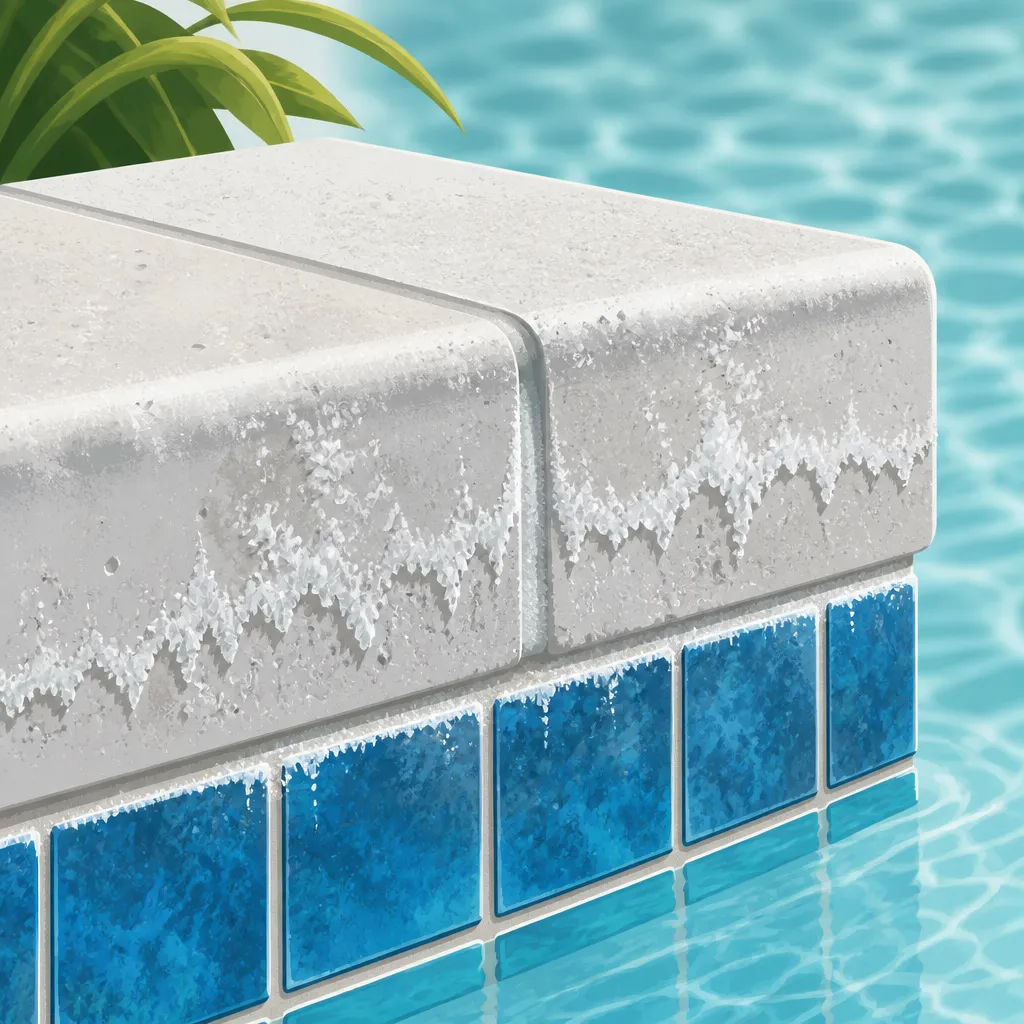
Salt deposits and efflorescence are a fact of life for coastal Sarasota pools, and regular chemical balancing plus sealing prevents them from turning into deeper structural issues. It's also worth remembering that the pool cage or enclosure surrounding your new pool faces the same salty, humid climate — corrosion on cage framing is a common follow-up issue, and our guide to pool cage rust repair in Lakewood Ranch walks through diagnosis and repair before it spreads.
- Sarasota's salty air means annual bonding system inspections are non-negotiable to prevent corrosion.
- If you haven't drained your pool in 5+ years, budget for a professional acid wash (typically $1,500–$3,500).
- Post-hurricane, hire a pool professional to inspect structural integrity before refilling; unseen cracks can leak thousands of gallons.
- Proper curing means fewer issues later; corners cut during the first month create expensive problems in years 3–5.
Real-World Example: A Lakewood Ranch Pool Project
A homeowner in Lakewood Ranch obtained a building permit for a 500 square foot gunite pool on a lot with a 28-inch water table. Geotechnical testing revealed clay lenses and loose sand beneath the proposed footprint. The engineer specified 18-inch pilings, epoxy-coated rebar, and a perimeter French drain system to manage the hydrostatic pressure. The standard timeline was 12 weeks; the additional drainage work added 2 weeks. Total cost came in at $108,000 against a $78,000 base estimate.
Curing took the full 28 days, with strict moisture management required through Florida's summer heat. On day 25, a lightning strike damaged part of the bonding system — but because the pool's electrical system was properly certified, only the damaged section needed replacement, at a cost of $800. Final inspection passed, and the pool was filled and ready 14 weeks after permit approval. Two years later, the owner reports zero structural issues; the upfront soil engineering investment paid for itself in peace of mind and avoided repair claims down the line.
What This Means for Sarasota-Bradenton Homeowners and Builders
- Homeowners must budget 8–14 weeks post-permit and $78K–$150K+ depending on size, location, and soil conditions; underestimating either creates stress and cost overruns.
- HOA communities and property managers need to understand inspection protocols and curing timelines to plan amenity projects and communicate realistic completion dates to residents.
- Coastal property owners (within 2 miles of Gulf) face $15K–$50K engineering and material premiums for salt-resistance and hurricane-rated design—not optional, mandated by code.
- Contractors must obtain accurate geotechnical reports and engineer designs before bidding; generic estimates ignore site-specific realities and cost homeowners thousands in change orders.
- Inspectors and permitting staff enforce Florida Building Code strictly in Sarasota-Bradenton; builders who skip steps or rush curing will fail inspections and face expensive rework.
- Long-term owners should budget annual maintenance ($1,500–$3,000/year) for chemical balancing, equipment service, and saltwater corrosion prevention; neglect rapidly accelerates deterioration.
Keep Learning
- Pool Cage Rust Repair in Lakewood Ranch: A Complete Diagnosis & Fix Guide — Once your gunite pool is built, protecting its enclosure from salt spray corrosion is critical. Learn how to diagnose and repair rust damage before it spreads.
- Pool Screen Repair Cost in North Port, FL: 2026 Price Guide — Florida's salty, hurricane-prone climate damages pool screens. Understand repair costs and when to replace vs. patch in the Sarasota-Bradenton area.
- Aluminum Pool Enclosure in Bradenton: Materials, Wind Codes & Installation Guide — After your pool is complete, an aluminum enclosure protects it from debris, insects, and weather while meeting Bradenton's wind code requirements. Explore materials and installation best practices.
Frequently Asked Questions
How do I find reliable concrete pool construction near me in Sarasota or Bradenton?
Look for licensed builders who provide geotechnical reports upfront, itemized bids, and references from recent Sarasota or Manatee County projects. Avoid contractors who quote a flat price without discussing soil conditions or water table depth for your specific lot.
Can construction continue during hurricane season?
Yes, but expect adjustments. Rain can actually help curing by keeping the gunite moist, though heavy storms may pause excavation or gunite spray days. Builders typically schedule around forecasted tropical systems rather than stopping the project entirely.
What happens if my pool fails a county inspection?
The contractor must make corrections and schedule a re-inspection, which typically adds 1–2 weeks to the timeline. Common failure points include rebar spacing, bonding connections, and plumbing pressure tests, all of which are fixable without redoing the entire shell.
Is a geotechnical report really necessary, or is it just an upsell?
It's necessary. Sarasota-Bradenton's sandy soil and fluctuating water table create real structural risks, and a $800–$2,500 report identifies exactly what your site needs before design finalizes. Skipping it often leads to costly change orders once excavation reveals problems the initial estimate didn't account for.
How soon after construction can I actually swim in the pool?
Plan on the full 8–14 week window from permit approval to first swim, with the 7–28 day curing period being non-negotiable before filling. Some builders allow a partial fill sooner for pressure testing, but full swimming access waits until curing and final inspections are complete.